Buckner Cemetery History
The cemetery history begins with the O'Brien Family. The O’Brien Family enters the picture in the 1850's with David William O'Brien arriving in Collin County with his family in 1857. He eventually acquired the part of the McGarrah land which includes Buckner Cemetery. David William O'Brien (1808-1885) along with his four brothers all born in Virginia, settled in Collin County. Two of David’s brothers are buried at Buckner along with their wives. George W O'Brien (1799-1876) and Drury Jefferson O'Brien (1806-1876). Only one of the brothers’ children is interred at Buckner, Drury’s son Franklin (1853-1870). Franklin’s mother, and Drury’s wife, was Edna Fallis (1816-1897). George was married to Jane Davis (1805-1871). David was married to Parmelia Edmundson (1823-1879). The Buckner/O’Brien Cemetery as we now know it began with the death and burial of Franklin O’Brien in 1870 and subsequent burials continued until 1897 when Edna Fallis O’Brien died. Edna was the last interment in Buckner Cemetery. Records of earlier burials have not been confirmed as to their location. Smallpox outbreaks were a
common cause of death as were various childhood maladies and the dangers to newborns in early Collin County. Kiowa Spotted Tail was known to locals and also is said to be buried at Buckner, although his unmarked grave has also yet to be identified and likely will remain so. The cemetery now stands as the last visible remnant of the early outpost named Buckner, as evidenced by the old bois d’arc fence posts which surround the O’Brien plot. The cemetery was recognized as an Historic Texas Cemetery by the THC in 2011 and the medallion below the historical marker for Buckner Cemetery signifies its importance in early Collin County history.
HTC medallion awarded in 2011
Historic Texas Cemetery Medallion, awarded to the cemetery from the great work of Joy Gough, a renowned Collin County Historian.

The different fences of the cemetery

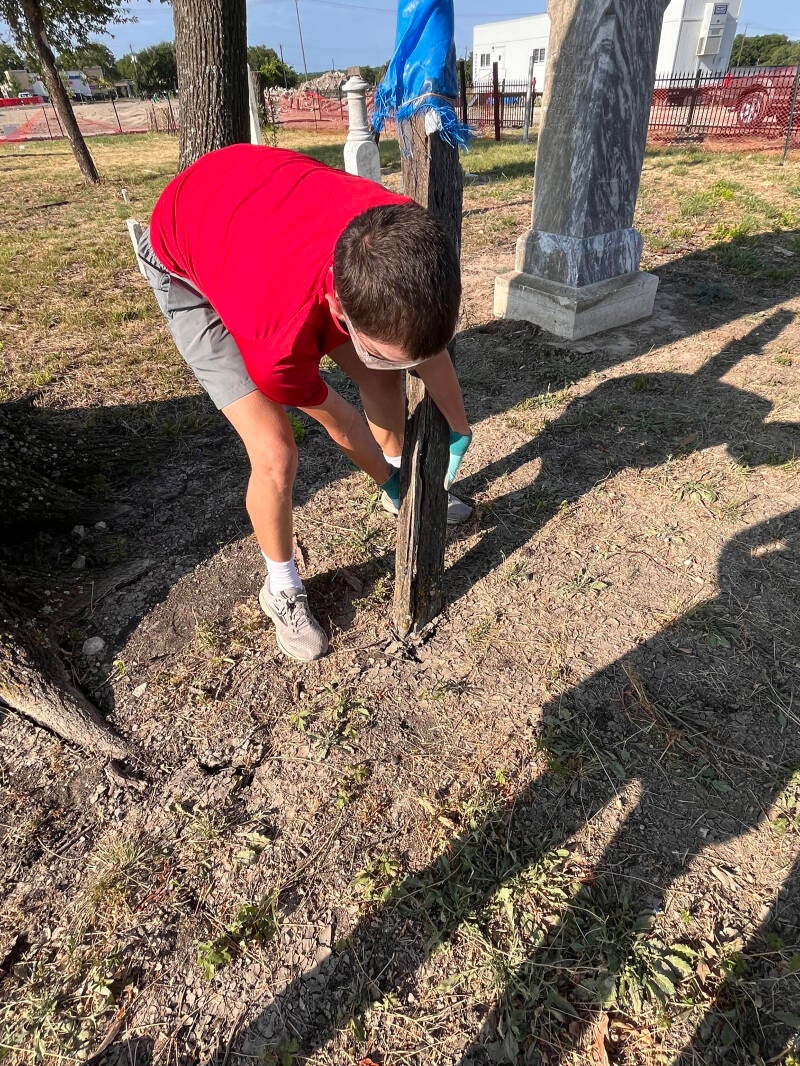
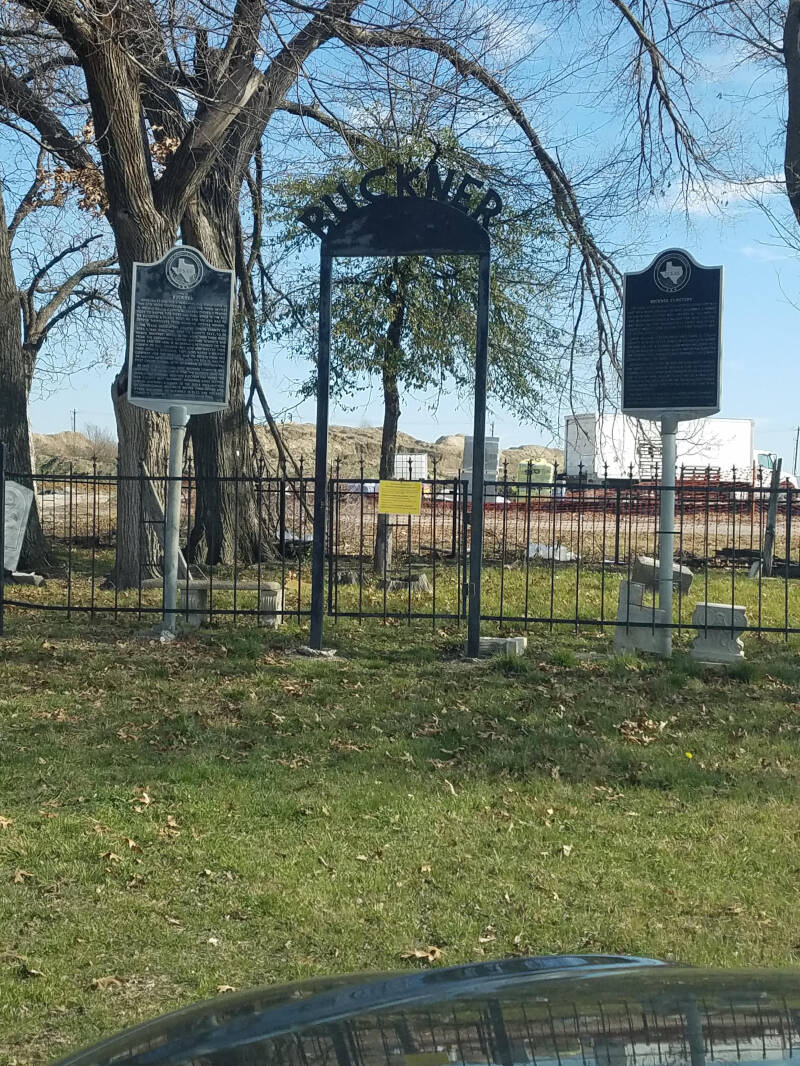
It is difficult to imagine what the prairie cemetery looked like prior to it being fenced. At various times, and by good Samaritans, there were fences placed in and around the cemetery. These fences played a huge part in this cemetery surviving the elements of time. They served as protection from grazing cattle and later helped protect the remnant headstones from vehicle traffic. There are four known fence types that were used prior to the cemetery restoration. Barbed wire, antique iron garden fencing that was repurposed into the cemetery, historic barnwood that was repurposed into a fence surrounding the O'Brien graves, and a vintage iron fence topped with finials (with a handmade iron gate keeper). The historic barnwood timber pieces were re-set back in the original places. The iron gatekeeper was re-purposed into a bench, and the vintage iron gate was also repurposed into a bench. All of these different fences contributed to the history of this place.


Create Your Own Website With Webador